Patellar Tendon and Quadriceps Tendon Tears: Causes, Treatments, and Evidence-Based Outcomes
Introduction
The extensor mechanism of the knee, made up of the quadriceps tendon, patella, and patellar tendon, is critical for walking, running, and jumping. Tears of the patellar tendon or quadriceps tendon are serious injuries that disrupt knee extension, causing pain, weakness, and disability.
This article explores reasons why these tendon tears occur, indications for operative and non-operative management, and the latest surgical techniques and evidence-based outcomes.
Why Do Patellar and Quadriceps Tendon Tears Occur?
Patellar Tendon Tears
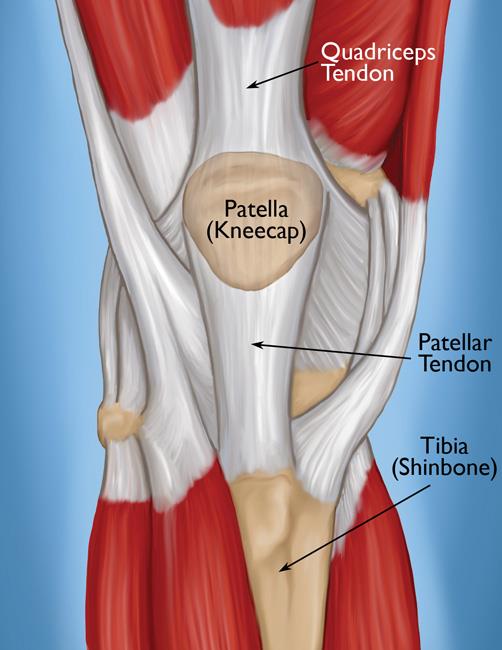
The patellar tendon connects the kneecap (patella) to the shinbone (tibia). Tears are often caused by:
- Sudden overload: Jumping, landing awkwardly, or direct trauma.
- Chronic degeneration: Tendinopathy (“jumper’s knee”) weakens tendon fibers.
- Systemic risk factors: Diabetes, chronic kidney disease, corticosteroid use, and fluoroquinolone antibiotics can predispose tendons to rupture.
Quadriceps Tendon Tears
The quadriceps tendon connects the quadriceps muscles to the top of the patella. Common causes include:
- Eccentric overload: Sudden force when landing from a jump or stumbling.
- Degenerative changes: Age-related tendon weakening, most common in patients >40 years old.
- Medical conditions: Diabetes, gout, rheumatoid arthritis, and obesity increase risk.
Symptoms and Diagnosis
- Sudden pain in the front of the knee
- A “popping” sensation at the time of injury
- Inability to straighten the knee or walk without assistance
- Visible gap above (quad tendon) or below (patellar tendon) the kneecap
- X-rays may show a low-riding patella (patellar tendon tear) or high-riding patella (quad tendon tear). MRI or ultrasound confirms diagnosis.
Treatment Options
Non-Operative Treatment
Non-surgical care is generally reserved for partial tears where some extensor function remains.
- Immobilization: Knee brace or cast in extension for 4–6 weeks.
- Physical Therapy: Progressive strengthening and flexibility once healing begins.
- Indications: Elderly patients with low functional demands, medically unfit for surgery, or partial tears with preserved strength.
Operative Treatment
Complete tendon ruptures require surgery, as non-operative care usually leads to poor function.
Techniques
- Primary Repair
- Transosseous tunnels: Sutures passed through drilled holes in the patella.
- Suture anchors: Modern technique using anchors in the patella for tendon reattachment.
- Both approaches may be reinforced with strong suture tape or augmentation grafts.
- Augmentation / Reconstruction
- For chronic tears or poor tendon quality, grafts (autograft, allograft, or synthetic) may reinforce the repair.
- Rehabilitation
- Early controlled motion protocols are becoming standard.
- Weight-bearing with brace protection usually begins within weeks, followed by progressive strengthening.
Evidence-Based Outcomes
Patellar Tendon Repairs
- Operative repair is the gold standard for complete tears.
- Studies show >85% of patients regain satisfactory knee function, with many returning to sport.
- Suture anchors may reduce operative time and allow strong fixation comparable to traditional transosseous tunnels.
Quadriceps Tendon Repairs
- Primary repair within 2 weeks of injury has the best results.
- Delayed repairs are more difficult and may require graft augmentation.
- Outcomes: Most patients regain full range of motion and strength, but persistent weakness can occur in 10–20% of cases.
Long-Term Prognosis
- Return to sport: 6–12 months depending on severity and sport.
- Complications: Stiffness, weakness, or rerupture (rare, <5–10%).
- Early repair consistently yields better functional scores and fewer complications than delayed surgery.
Conclusion
Patellar and quadriceps tendon tears are severe knee injuries that disrupt mobility and require prompt diagnosis and management. While partial tears may heal with conservative care, complete tears almost always require surgical repair to restore knee extension.
Evidence shows that early operative repair provides the best outcomes, with modern fixation techniques and structured rehabilitation helping patients return to daily activities — and even competitive sports.
If you experience sudden knee pain and loss of extension, seek immediate orthopedic evaluation, as early treatment is critical for recovery.